WILDLIFE PHOTOGRAPHER & PHOTOGRAPHY SAFARI LEADER
About Alan
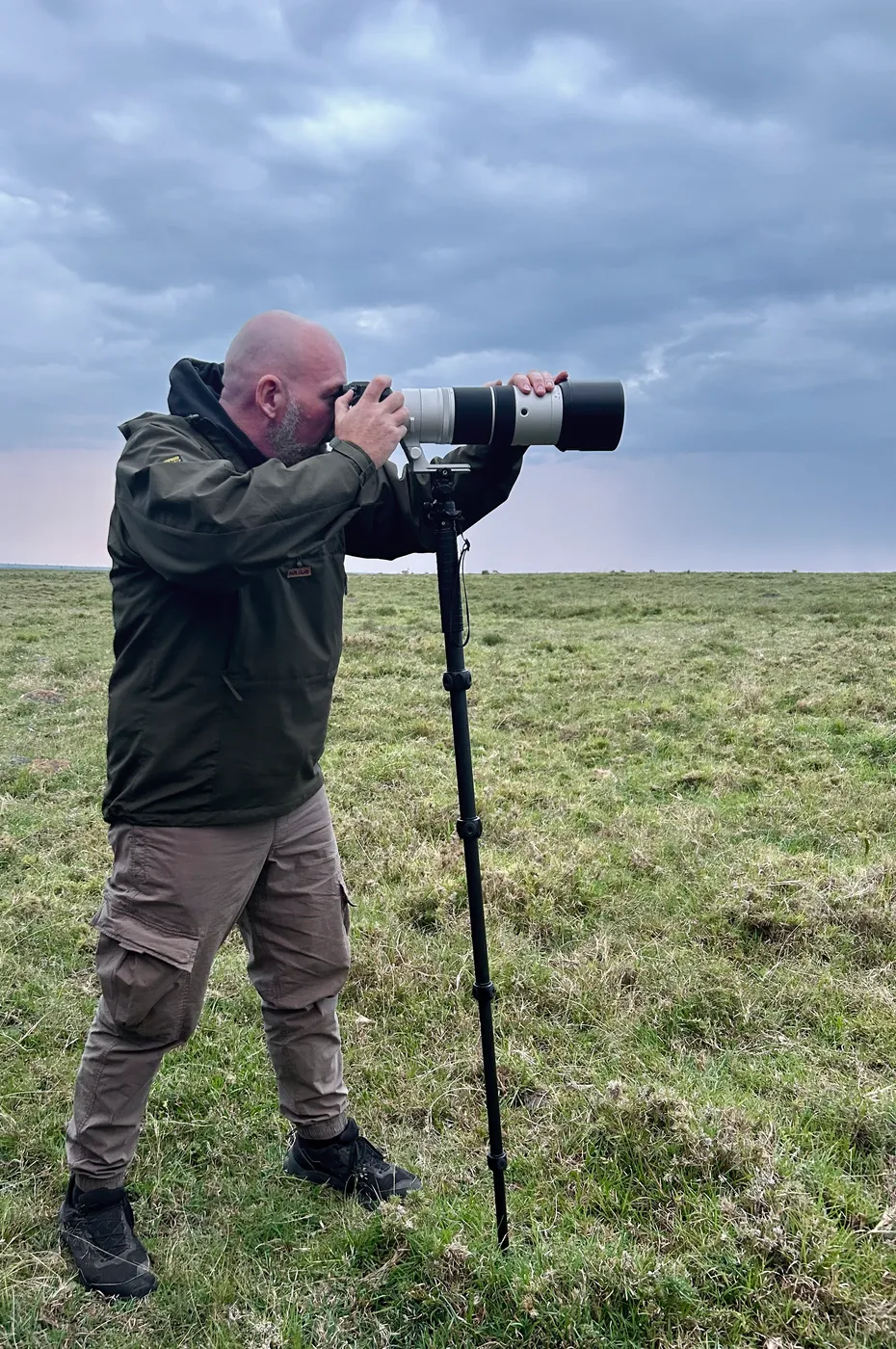
I’m a wildlife photographer, safari leader and natural history enthusiast with a particular fascination for fieldcraft. My appreciation of wildlife fuels my desire to document and share the natural world, from my favourite local patch, the Farne Islands, to the birds and mammals of sub-Saharan Africa.
I’m particularly interested in understanding wildlife behaviour, interactions between species and the habitats in which they live. I’m always looking beyond simply photographing an animal to find ways of creating images that tell a natural history story and give a sense of the world that animal inhabits.
Alongside my photography, I have an enthusiastic obsession with fieldcraft: reading the landscape, interpreting behaviour and piecing together the clues that reveal what is happening beyond what we can immediately see. I believe this combination of photography and field knowledge creates more meaningful encounters, whether I’m working in the field on my own or sharing them with guests.
In 2020, I formally consolidated my photography safari work with my friend and business partner Kaleel Zibe, co-founding African Photography Safaris, where I serve as a director. I lead and guide photography safaris across sub-Saharan Africa, with a particular focus on ethical and sustainable approaches that put wildlife, conservation and meaningful experiences at the heart of the trip. I also work as a freelance guide for Penda Photo Tours, leading immersive photography safaris and sharing my knowledge and enthusiasm for the natural world.
From 2020 to 2023, I was honoured to be an official FUJIFILM UK X-Photographer. I continue to work closely with the UK team as an ambassador, appearing at events including The Photography & Video Show, wildlife festivals and retailer events.
I also welcome commissions for photography and filmmaking assignments, workshop and tour leading, written articles, guest speaking and media work. My previous and current clients include FUJIFILM UK, Future Publishing, WEX, Park Cameras, Wildfowl & Wetlands Trust, Durham University, Cumbria University, Penda Photo Tours, Digital Photographer Magazine, Bird Watching and the Sunday Telegraph, and more…
What’s in the Bag? Cameras, Cables, and Chaos!
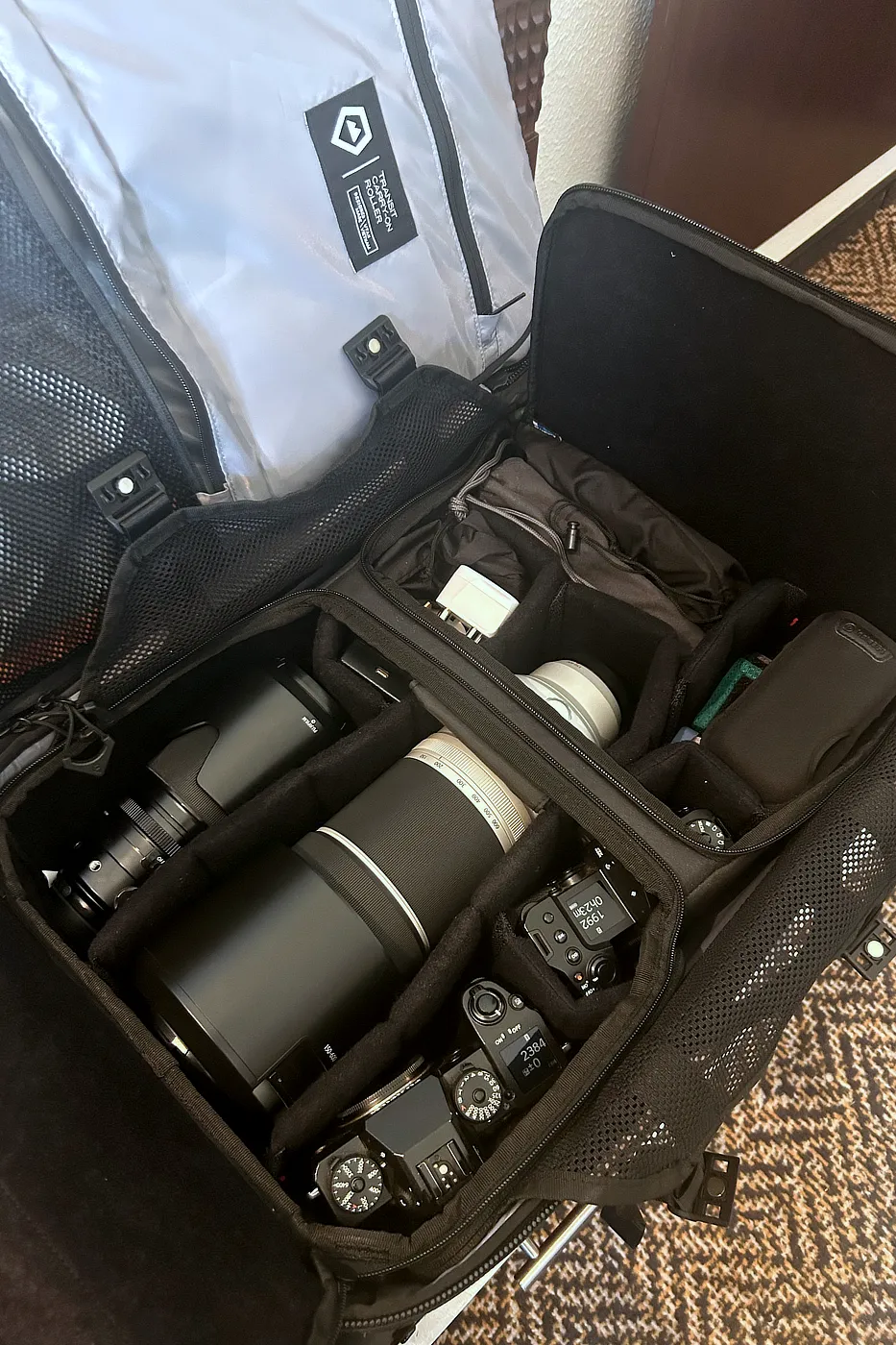
I use Fujifilm cameras and lenses, the X-H2S, X-H1 and sometimes my old X-T2 gets an outing. My main lenses are the, XF150-600mm, XF100-400mm, XF50-140mm and XF 18-55mm get a look in too, plus the 1.4x teleconverter.
Over the years I’ve been working with FUJIFILM UK I’ve also had extensive use of the X-T3, X-T4, X-T5 and XH2 plus the XF200mm and XF10-24mm lenses.
I’ve also enjoyed working with the the Fujifilm medium format GFX50s, GFX100s and GFX100sII with the GF500mm, GF250mm and GF32-64mm. Incredible gear, it must be said!
I use a 3 Legged Thing Winston 2.0 tripod and Alan or Alana monopods together with various heads but mainly the AirHed Trinity. All are incredibly lightweight but sturdy and very well engineered.
Like most photographers, I have a ridiculous collection of camera bags. Actually, I could write a blog, “Alan Hewitt and his camera bags”. When I’m travelling I now use the Wandrd Transit Carry On Roller as my cabin bag for most of my gear. I also use a ThinkTank Airport Commuter for travelling and a Manfrotto RedBee.
I like to pack a couple of Gardepro night-vision PIR trail cameras too. We’ve picked up some incredible footage of night time visitors around safari camps and lodges some of which is on mine and African Photography Safaris YouTube channels.
I also like to use an Atomos Shinobi field monitor. Sometimes for filming work and to share camera viewfinders in real time. This is a great aid to photography tuition in the field.
An Insta 360 action camera and a DJI Osmo Mobile 7p are usually squeezed in too. It is always good to collect some BTS / social media footage from behind the cameras!
My most important piece of safari clothing? A Regatta heated gilet! It’s like having your own heated seat on cold mornings on safari.
About Alan Hewitt: Photography Ethics Statement
As a responsible and conservation-minded photographer, I am committed to a number of ethical standards in my photography.
First and foremost: The welfare of subjects always takes priority over the photograph.
The vast majority of my photographs are of wild subjects. Where this is not the case, I point out the circumstances surrounding the photograph.
I do not use live bait. It is morally wrong to facilitate the death of any species for photographic entertainment. Nor do I use any other bait which may harm or adversely affect the behaviour or well-being of an animal. I do not use sound lures to attract animals unless I am working under authorised, controlled and managed conditions.
I put a great deal of effort into learning about the the animals I photograph and the habitat I work in. This fieldcraft helps me avoid any actions which may cause distress or harm to the animals or place myself or those with me in any danger.
When processing my photographs, I enhance and ‘fine-tune’ only. I do not use any digital manipulation in such a way to misrepresent the subject or its habitat and environment. I believe wildlife photography should exist to form a natural history record and that carries an implicit expectation that the photograph is a depiction of a scene witnessed and experienced in nature by the photographer.