During our recent July 2026 safari at Umlani Bushcamp in South Africa’s Timbavati, I set up my trail camera outside my room to see what was moving around during the night. We always hear nocturnal wildlife without knowing what is going on. We don’t recommend wandering throughout the night!
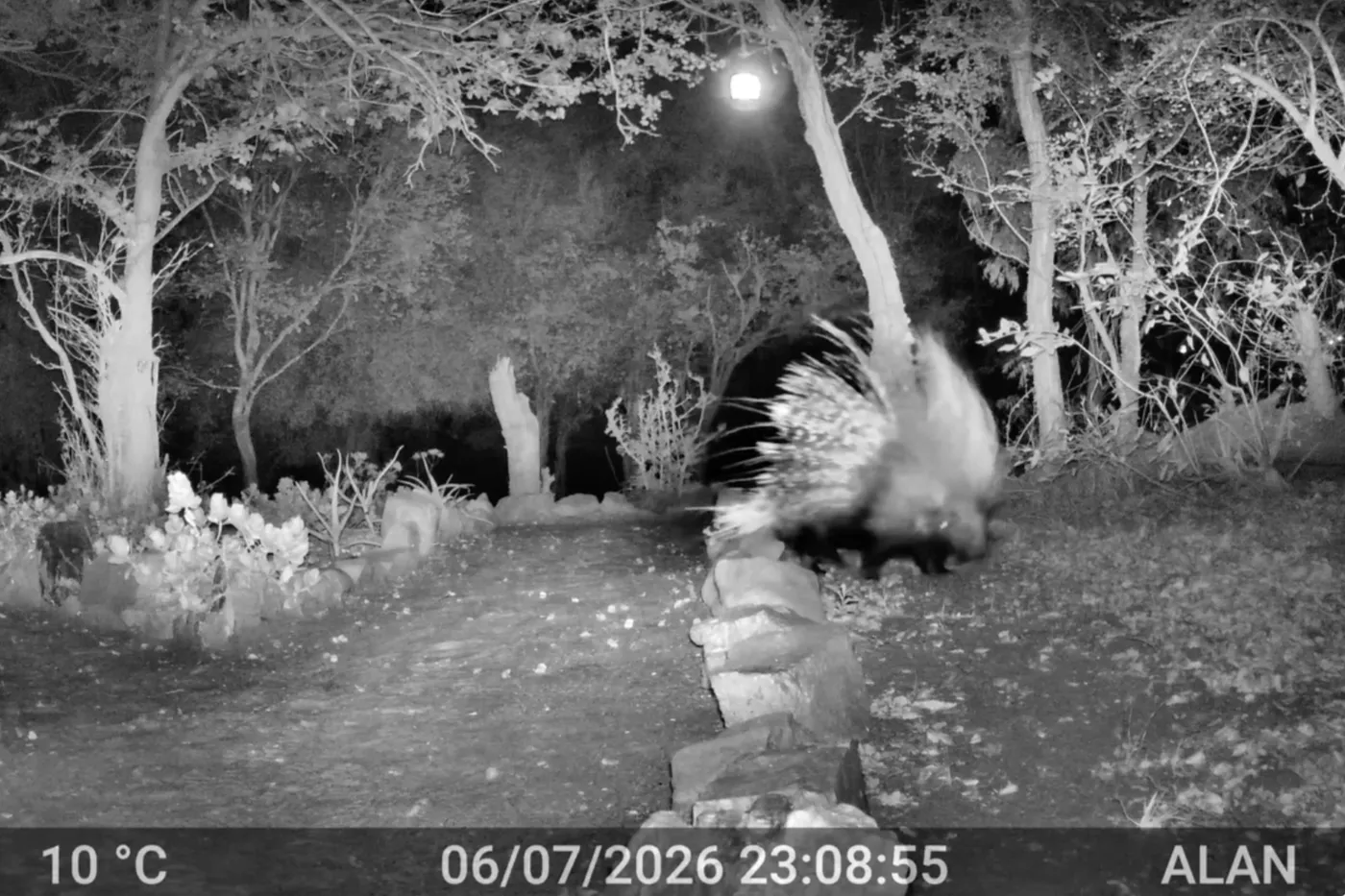
So, what did my Umlani Trailcam detect? A porcupine, a genet and a spotted hyena.
I enjoy setting the cameras up and reviewing the footage afterwards. It is a useful and simple bit of fieldwork, but you never quite know what you are going to find.
The camera I use is a GardePro E8 2.0 Pro. It has Wi-Fi, a rechargeable battery and a no-glow infrared sensor. It is reasonably priced, which is just as well because I regularly strap trail cameras to trees and leave them outside, where elephants, hyenas, lions may do their worst. I sometimes coat it in dry elephant dung to mask the scent! Understandably, I am reluctant to spend a fortune on them. It may not be the best trailcam in terms of visual acuity, but that isn’t really what I need it for.
The important thing is that it can record what is happening in pitch black darkness. I’m not looking for award winning images from it. I simply want to know what is passing through while I’m asleep and provide our photography safari guests with another interesting experience. As this footage from Umlani shows, there can be quite a lot going on.
Click here to read more about our safari in South Africa’s TImbavati with Penda Photo Tours. READ MORE
That was the question that started nagging at me after one of many fantastic leopard sightings in Botswana’s Tuli Wilderness in July, while leading a photography trip for Penda Photo Tours based at Serolo Camp. We had a young male leopard in front of us that seemed to fit an age and time window of a cub I photographed in 2024. It was a bit of a long shot but naturally curiosity got the the better of me. Was it one leopard, two years apart? Here’s the story…
An Unusually Good Area for Leopards and Brown Hyenas
We had already enjoyed an exceptional few days of wildlife encounters, particularly with leopards and brown hyenas. During one late afternoon, we had three leopards and three brown hyenas within around 30 yards of each other. Six animals might not immediately sound remarkable, but consider what we were looking at. Leopards are solitary animals, brown hyenas are the rarest hyena species, predominantly nocturnal and solitary scavengers. To have three of each in the same area, all active during daylight, was something I would never have anticipated witnessing.
But, safaris can be unpredictable. You arrive with an idea of what you might see, but the African wilderness sets its own agenda.
Never Ignore Something That Looks Out of Place
One morning, driving along a track, our fantastic Tuli WIlderness guide Jou spotted a dark patch in a distant shepherd tree. It could have been almost anything. A shadow or a clump of foliage or maybe nothing at all.
On the safaris I lead, I always stress the importance of taking time to investigate anything that looks unusual. What looks like a distant termite mound can turn out to be a lion. Does that pile of leaves appear to have ears? And that patch of foliage, it looks like it has spots. After all, this is about camouflage, and the whole point is not to be obvious.
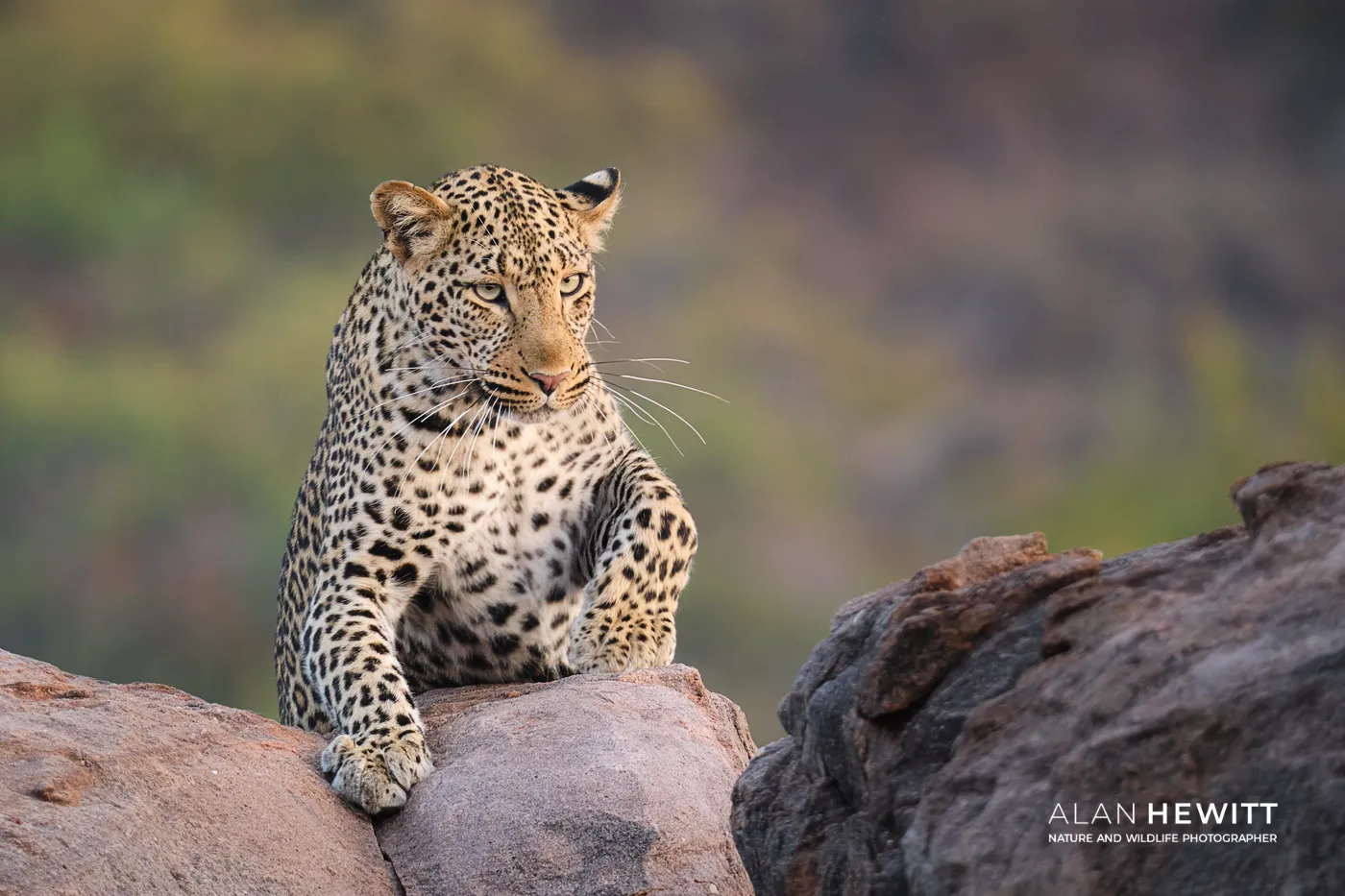
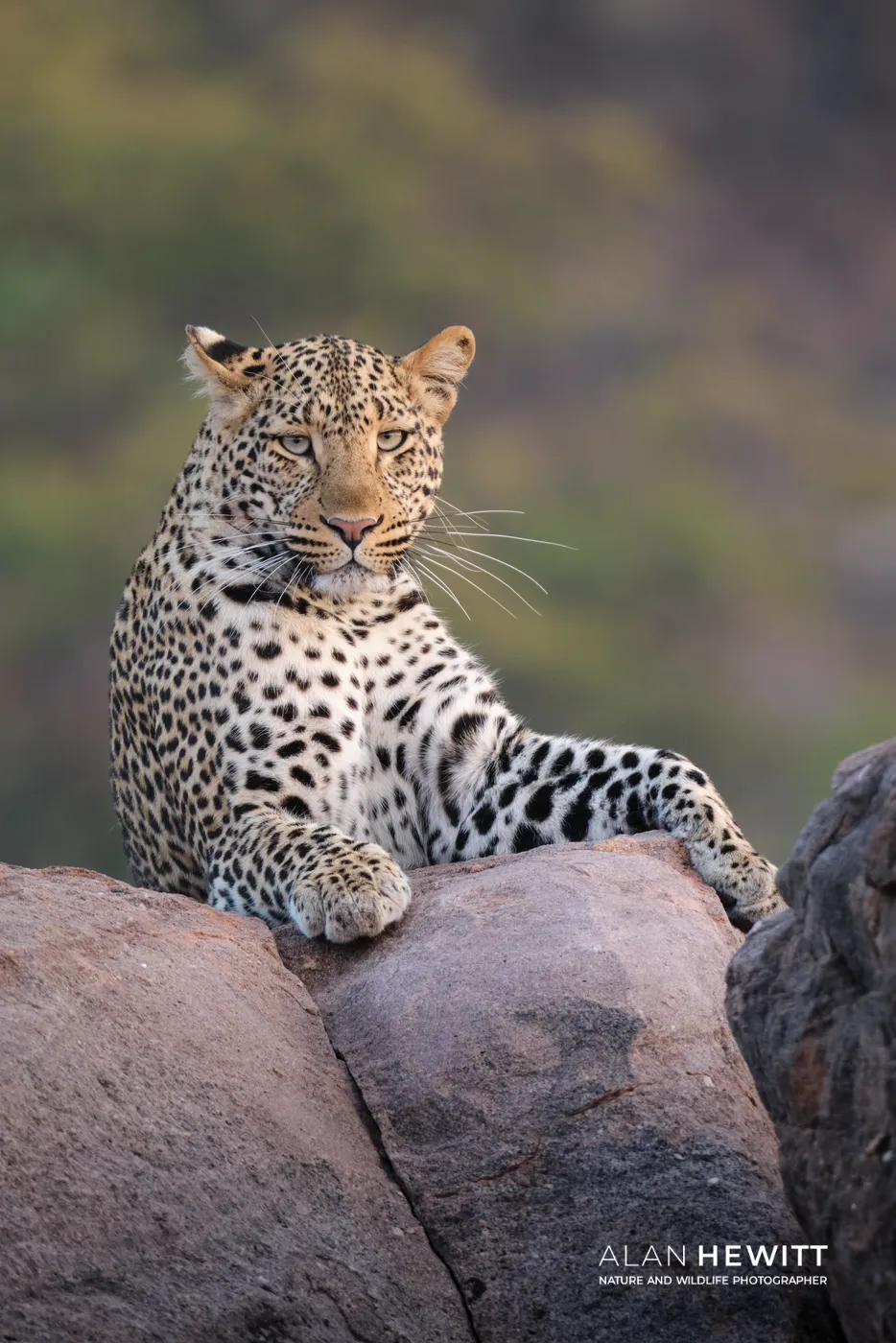
So, with our nothing ventured, nothing gained attitude, we took a closer look. As we approached, that darker patch slowly transformed into a leopard, tucked deep in the foliage with an impala it had killed. We watched for a few minutes before it left the tree and took up a position on some rocks nearby. It had spotted a brown hyena approaching, presumably hoping for an easy meal and it settled into a position where it could monitor the approaching scavenger.
For us, however, it was almost the perfect photographic opportunity.
The leopard was elevated on the rocks, completely unobstructed and with a distant kopje as a background. I find ageing leopards considerably more difficult than ageing lions. But there was enough about his size and appearance to tell us he was a young male.
A Familiar Leopard?
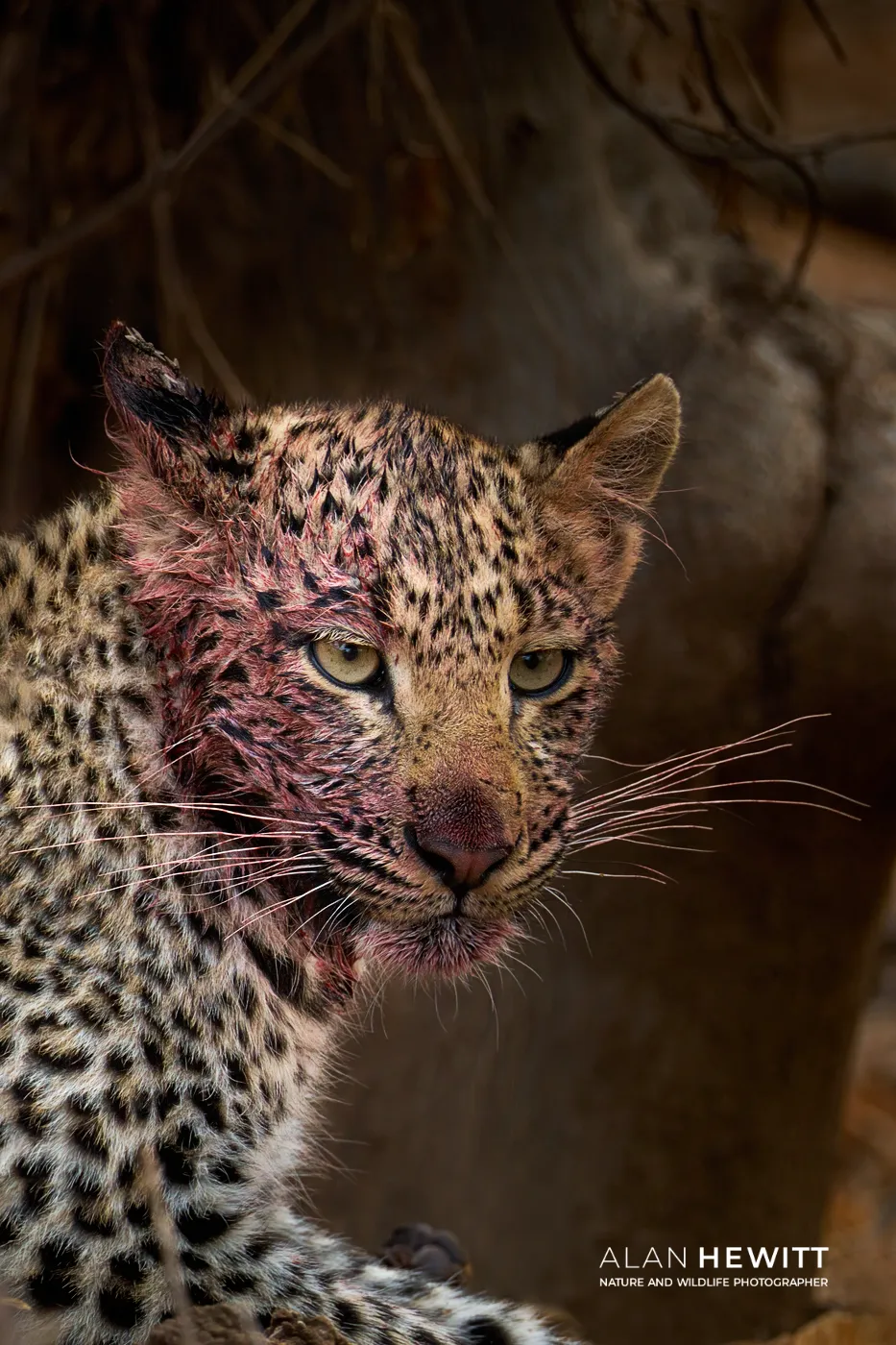
Two years earlier, in July 2024, our group photographed a young leopard cub feeding on an impala that its mother had killed on the floodplains of the Limpopo River. At the time, it was simply another very memorable leopard encounter. The cub, which we believed to be male, was still very young and completely dependent on its mother. As it was already eating meat, we could estimate that it was at least seven or eight weeks old.
Was this the same male?
It was a long shot, certainly not completely out of the realms of possibility. This leopard’s apparent age, sex and location all fitted a plausible timeline and it was more than enough to make me curious.
On returning to the UK, I searched through my Capture One library of leopards I have photographed in Botswana’s Tuli Wilderness. Yes, I really am that organised!
Comparing a leopard cub with a young adult isn’t straightforward. Leopards change considerably as they grow, and individual identification relies on finding then comparing distinctive spot patterns from suitable angles. Researchers working with predator populations use ID kits with photographs and detailed records rather than relying simply on general appearance.
It certainly didn’t help that much of the young cub’s face in my photograph from 2024 was covered in blood!
The Same Leopard
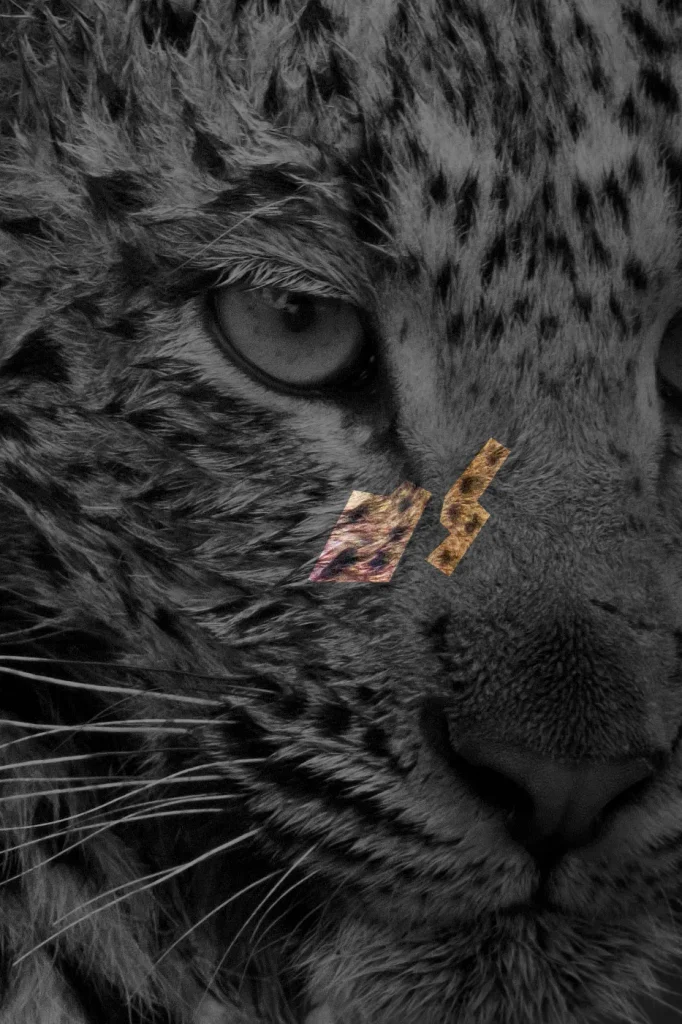
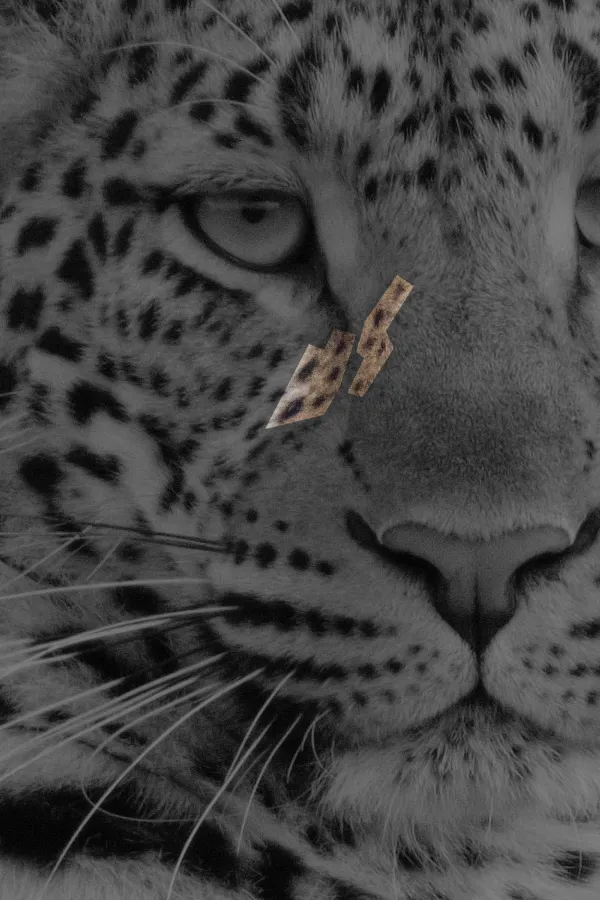
I compared two photographs magnified to 100%, carefully looking for a combination of markings that would be distinctive. I concentrated on a small pattern between his right eye and nose. The more I looked, the more interesting it became as this arrangement of spots matched. From left to right in the images below, a pair of 2 dark larger spots followed by three smaller spots, then 5 spots covering the same distinctive angular pattern.
What had started as a hunch based on the leopard’s apparent age, sex, location and the two year gap was now something much more substantial.
I had unknowingly photographed the same leopard at two very different stages of its life. And that, for me, is where the story becomes more interesting than simply photographing a leopard.
More Than Just a Wildlife Sighting
One of the things I find so fascinating about returning to the same wilderness areas and working alongside incredible guides like Jou, is that safaris become more of a series of connected encounters. Jou is truly one of the most incredible guides I worked with. He has taught me so much, and it is through his eyes and knowledge that I have learned to understand about how the different pieces of this ecosystem fit together.
The leopard was a great encounter in its own right. Finding a leopard with impala prey, watching it move onto the rocks, and photographing it against that beautiful background would have been enough. But discovering afterwards that I may have photographed that same animal two years earlier made it something else entirely. For a wildlife photographer, that adds another dimension to the images. You’re not simply photographing a leopard. You are documenting an individual animal at different stages of its life.
It’s also why I think good guiding is about much more than simply finding wildlife. The real value comes from understanding what you’re looking at. Knowing and reading the landscape, recognising individuals, understanding behaviour, and being able to put a sighting into context can turn a good wildlife encounter into something much more meaningful. During future safaris at Tuli Wilderness, I’ll certainly be examining my photographs of male leopards much more carefully.
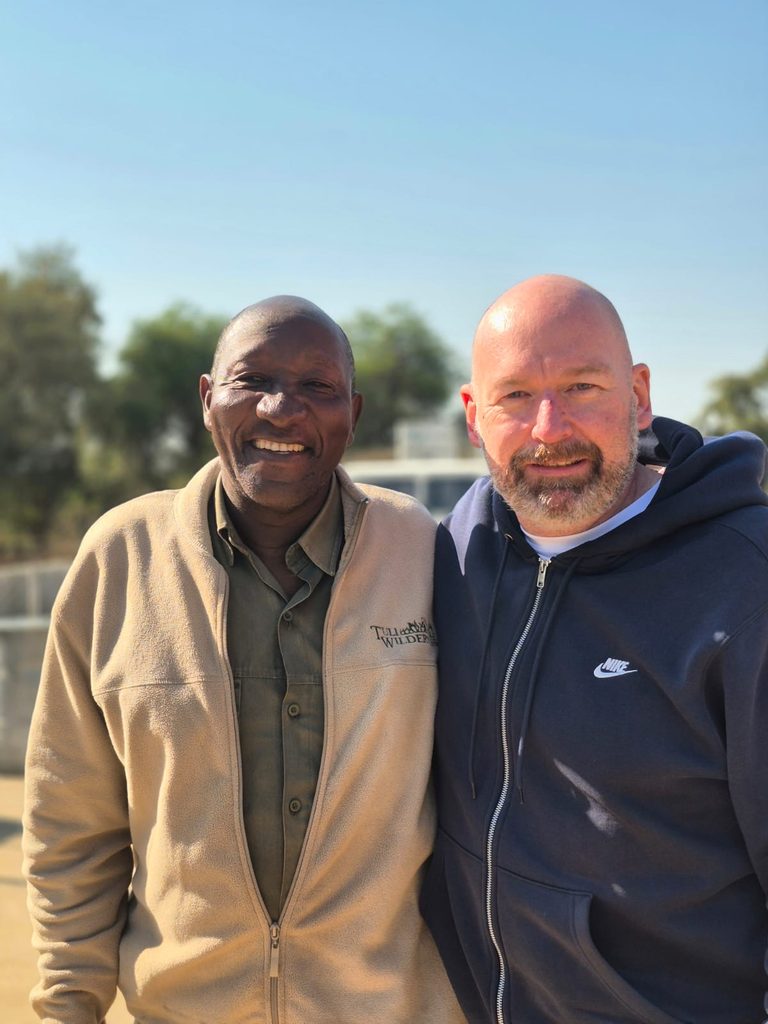
Jou and Alan at the Platjan border crossing in Botswana.